Scale-Ready: 7 Infrastructure Decisions Florida Companies Must Make Before Growth Arrives

Growth is not inherently a success story. For Florida businesses that reach their inflection point without adequate infrastructure, rapid expansion can be as destabilizing as stagnation. Suddenly, the systems that worked for a twelve-person team buckle under the weight of forty. The workspace that felt energetic at half capacity becomes a logistical obstacle at full occupancy. The founder who once knew every client by name is now a bottleneck in every decision chain.
The companies that scale gracefully—the ones that appear, from the outside, to grow effortlessly—are rarely lucky. They are prepared. Specifically, they have made a series of deliberate infrastructure decisions well before growth demanded them. What follows is a structured breakdown of those decisions, organized around the operational and spatial dimensions that determine whether a Florida business scales with momentum or with pain.
1. Define Your Organizational Architecture Before You Need It
The most common scaling failure in Florida's mid-market business community is not a product problem or a market problem. It is a people-structure problem. Companies hire to fill immediate gaps rather than to populate a deliberate organizational architecture, and the result is a reporting structure that resembles a tangle of extension cords rather than a circuit board.
Before growth arrives, leadership must define the organizational model the business will require at two to three times its current size. This means identifying functional departments, establishing clear reporting lines, and determining which roles will be hired internally versus sourced externally. It means deciding whether the company will operate with a centralized or distributed decision-making model—a question that has profound implications for hiring profiles, compensation structures, and workspace design.
In Florida's labor markets—particularly in Miami, Tampa, and the emerging tech corridor around St. Petersburg—talent acquisition is competitive. Companies that can present prospective hires with a coherent organizational vision attract stronger candidates and retain them longer.
2. Document Workflows Before They Become Tribal Knowledge
In early-stage businesses, institutional knowledge lives in people's heads. Processes are informal, communication is ad hoc, and things get done because the right person happens to be in the room. This is efficient at small scale and catastrophic at large scale.
Workflow documentation is not glamorous work. It is, however, foundational. Before a Florida business reaches its growth inflection point, every repeatable process—client onboarding, service delivery, vendor management, financial reporting—should be mapped, documented, and housed in a system that does not depend on any single individual's memory.
The practical benefit extends beyond operational continuity. Documented workflows are the prerequisite for meaningful delegation, which is the prerequisite for leadership scalability. A founder who cannot delegate is a founder who cannot scale.
3. Select Technology Systems for the Business You Are Becoming
Technology infrastructure decisions made under growth pressure are almost always suboptimal. Systems are selected for speed of implementation rather than fit, integrations are patched together rather than designed, and the resulting architecture creates data silos, manual workarounds, and compounding inefficiencies.
The discipline required here is to evaluate and implement core technology systems—CRM platforms, project management tools, financial systems, HR software—against the requirements of the business at its intended scale, not its current size. A professional services firm in Jacksonville that expects to triple its client base within three years should not select a CRM designed for boutique operations. The migration cost, in both time and data integrity, will far exceed the savings from a lower initial price point.
Florida's business technology landscape is maturing rapidly, with a growing ecosystem of implementation partners and consultants who specialize in growth-stage system design. Engaging that expertise before the growth wave arrives is substantially less expensive than engaging it during.
4. Design Physical Workspaces for Flexibility, Not Just Current Headcount
Workspace design is frequently treated as a facilities decision rather than a strategic one. It should be both. The physical environment in which a company operates shapes collaboration patterns, reinforces or undermines culture, and either accommodates or obstructs growth.
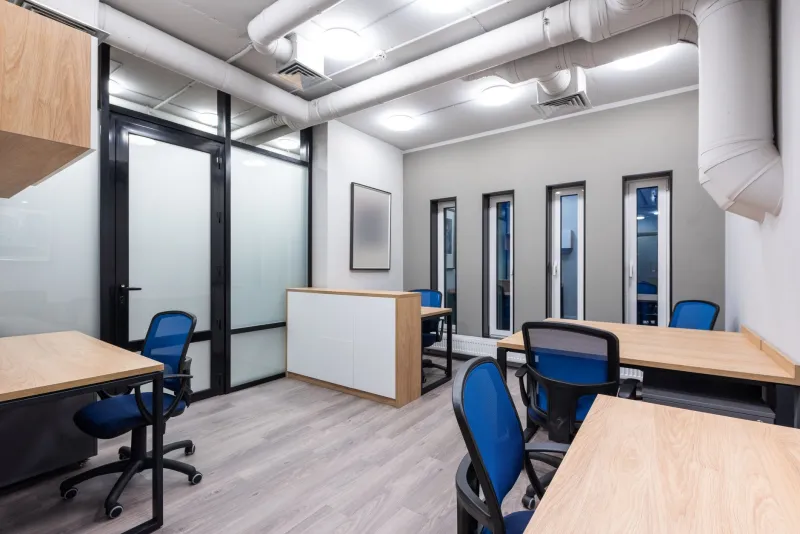
For Florida businesses planning their workspace—whether in a Brickell high-rise, a Wynwood creative district loft, or a suburban office park in Maitland—the design brief must account for future configurations, not just present ones. This means specifying modular furniture systems that can be reconfigured as team sizes change. It means designing for acoustic flexibility, so that spaces built for focused individual work can be adapted for collaborative team functions without a full renovation. It means ensuring that electrical, data, and HVAC infrastructure can support a higher density of occupants than the initial buildout requires.
At Blueprint FL, we consistently find that the marginal cost of designing for flexibility at the outset is a fraction of the cost of retrofitting a space that was built too rigidly for the business it was intended to serve.
5. Establish Financial Reporting Cadences That Support Strategic Decisions
Scaling businesses generate more financial complexity than their early-stage counterparts, and that complexity arrives faster than most founders anticipate. Revenue streams diversify. Cost structures shift. Cash flow dynamics change as client volumes increase and payment cycles lengthen.
The financial reporting infrastructure appropriate for a five-person startup—a monthly P&L reviewed informally over coffee—is not appropriate for a fifty-person growth-stage company. Before reaching that scale, businesses should establish formal reporting cadences that include weekly cash flow monitoring, monthly departmental performance reviews, and quarterly strategic financial assessments. Leadership should be fluent in the metrics that drive the business, and those metrics should be visible, consistent, and actionable.
This is not an accounting exercise. It is a strategic one. The companies that scale most effectively are those whose leadership teams make decisions from a shared, accurate understanding of financial reality.
6. Build Client Experience Infrastructure Before Volume Overwhelms It
In Florida's service-intensive economy—where hospitality, healthcare services, financial advisory, and professional consulting represent major sectors—client experience is a primary competitive differentiator. It is also among the first things to deteriorate under growth pressure when the infrastructure to support it has not been built in advance.
Client experience infrastructure encompasses the systems, touchpoints, and personnel protocols that ensure consistent service delivery regardless of volume. It includes client communication templates, service level standards, escalation procedures, and feedback mechanisms. It also includes the staffing ratios and role definitions that prevent individual team members from becoming overwhelmed as client counts increase.
Companies that codify their client experience standards before growth arrives protect the reputation that attracted growth in the first place.
7. Align Physical Expansion Strategy With Market Intelligence
For Florida businesses with multi-location ambitions—whether in retail, healthcare, food service, or professional services—the sequence in which markets are entered matters enormously. Expansion decisions driven by opportunism (an attractive lease became available) rather than market intelligence (this submarket demonstrates demand characteristics that align with our model) produce inconsistent results and dilute the organizational focus required to execute well.
Before growth arrives, leadership should define the criteria by which expansion markets will be evaluated: demographic profiles, competitive density, real estate cost structures, proximity to existing operations, and regulatory environment. Having that framework in place means that when an opportunity presents itself, it can be assessed against a defined standard rather than debated from scratch.
The Preparation Advantage
Florida's most successful growth-stage companies do not simply react to opportunity. They build the infrastructure that allows them to capture it—deliberately, systematically, and well in advance of the moment it arrives. The seven decisions outlined above are not sequential. They are interdependent, and they are most effective when addressed as a coordinated set rather than as isolated line items on an operational checklist.
Blueprint FL partners with Florida businesses at every stage of their growth trajectory to develop the operational and spatial frameworks that make scaling a strategic achievement rather than a structural emergency. The time to build for growth is before you need to.