When the System Is the Problem: Rethinking Workflow Architecture to Unlock Florida Business Performance
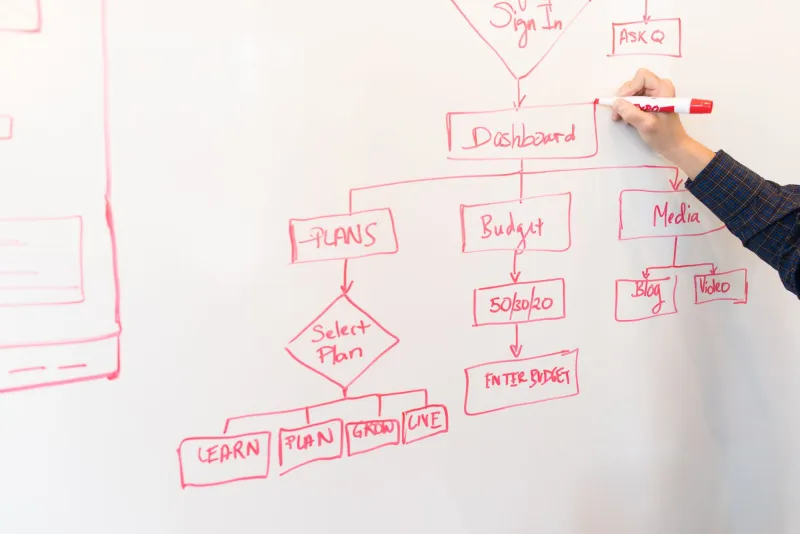
The Misdiagnosis That Keeps Costing You
There is a recurring pattern among Florida businesses that struggle with productivity: leadership identifies a performance gap, attributes it to the people involved, and initiates another round of hiring or retraining. The cycle repeats. Costs accumulate. Frustration sets in. And the actual source of the problem — the structural design of how work gets done — remains entirely untouched.
This misdiagnosis is not a failure of intelligence. It is a failure of visibility. Workflow bottlenecks are, by nature, difficult to see. They do not appear on a balance sheet. They rarely surface in exit interviews. They tend to manifest as friction — the small, persistent inefficiencies that slow output, exhaust employees, and gradually erode the operational foundation of a business.
For Florida companies operating in competitive markets from Miami to Jacksonville, that friction is not a minor inconvenience. It is a measurable drag on profitability.
What a Workflow Bottleneck Actually Looks Like
A workflow bottleneck is any point in an operational sequence where information, decisions, or physical materials slow down or stop unnecessarily. In a well-designed system, work flows through a business the way traffic moves on a well-engineered road — predictably, efficiently, and without unnecessary congestion.
In a poorly designed system, the opposite occurs. Tasks pile up at approval stages because decision authority is unclear. Communication breaks down because teams are physically separated in ways that create information silos. Onboarding fails not because new hires lack capability, but because the institutional knowledge they need is undocumented and inaccessible.
These are not personnel failures. They are design failures. And unlike personnel failures, they cannot be resolved by replacing the individuals involved. Hire a more experienced employee into a broken system, and the system wins every time.
The Physical Environment as Workflow Infrastructure
One dimension of workflow design that Florida business owners frequently overlook is the direct relationship between physical space and operational efficiency. The layout of a workspace is not merely an aesthetic consideration — it is a functional one. Where teams are positioned relative to one another, how meeting spaces are configured, whether collaborative zones are accessible or isolated: all of these spatial decisions either support or impede the natural movement of work.
Consider a common scenario in Florida's growing mid-market firms: a sales team seated on one floor, an operations team on another, and a finance function in a separate wing. In isolation, each group may perform adequately. But the handoffs between them — the moments when a deal needs to move from sold to implemented, or when a budget question needs a rapid answer — become prolonged and error-prone. The physical distance creates procedural distance, and the result is a bottleneck that no amount of individual talent can bridge.
Strategic workspace design addresses this directly. By mapping information flow against physical layout, it becomes possible to identify where spatial reorganization can reduce friction, accelerate decision cycles, and improve cross-functional communication without adding headcount.
Process Documentation as a Competitive Asset
Beyond the physical environment, workflow architecture depends heavily on the clarity and accessibility of process documentation. Businesses that rely on institutional memory — on the knowledge held by individual employees rather than embedded in documented systems — are perpetually vulnerable. When those employees leave, the knowledge leaves with them, and the next person hired into the role must rebuild understanding from scratch.
In Florida's dynamic labor market, where industries like hospitality, construction, and professional services experience significant workforce mobility, this vulnerability is acute. Companies that have invested in clear, accessible process documentation consistently outperform those that have not — not because their employees are more capable, but because their systems are more resilient.
Effective process documentation does not require elaborate technology. It requires deliberate design: mapping each operational sequence, identifying decision points, clarifying ownership, and making the resulting documentation available at the moment of need. When this work is done well, a new employee can reach functional competence faster, a manager can identify bottlenecks more clearly, and the business as a whole becomes less dependent on any single individual.
Communication Systems and the Flow of Information
The third dimension of workflow architecture is communication infrastructure — the formal and informal channels through which information moves across an organization. In many Florida businesses, communication systems have evolved organically rather than been designed intentionally. The result is a patchwork of email threads, messaging platforms, verbal handoffs, and informal networks that functions reasonably well under normal conditions and fails predictably under pressure.
Designing communication systems deliberately means asking a different set of questions. Which decisions require synchronous communication, and which can be handled asynchronously? Where are the critical handoff points in a given workflow, and what confirmation mechanisms exist to ensure information is received and acted upon? How does urgent information reach the right person without creating constant interruption for everyone else?
These are not technology questions, though technology is often part of the answer. They are design questions — and the answers have direct implications for how efficiently a business operates and how sustainably its employees can perform over time.
Redesign Before You Recruit
For Florida business owners facing persistent productivity challenges, the strategic recommendation is clear: before initiating another hiring cycle, conduct a honest assessment of the workflow architecture in which those hires will operate. If the system is broken, a new employee will simply encounter the same obstacles as the last one.
This assessment should examine three areas: the physical layout of the workspace and its relationship to information flow; the state of process documentation and its accessibility to the people who need it; and the design of communication systems and their capacity to support reliable handoffs.
In most cases, this examination will surface specific, addressable problems — not vague cultural issues or general capability gaps, but concrete structural failures that can be corrected through deliberate redesign. That redesign may involve reconfiguring a workspace, documenting a previously informal process, or establishing a clearer communication protocol for a critical workflow.
The investment required is typically far less than the cost of continued turnover, retraining, and lost productivity. And unlike a hiring decision, a well-designed system compounds over time — improving performance not just for one employee, but for every person who works within it.
Building a System That Performs
Florida's business environment rewards companies that can execute consistently at scale. The businesses that achieve that consistency are rarely those with the most exceptional individual talent — they are the ones that have built systems capable of converting ordinary effort into reliable results.
Workflow architecture is the foundation of that capability. When information moves cleanly, when processes are documented and accessible, and when physical space supports rather than impedes collaboration, the entire organization performs at a higher level. The bottlenecks disappear — not because the people changed, but because the system did.
That is the distinction that separates businesses that grow from those that merely survive. And it begins not with a new hire, but with a clear-eyed assessment of the design of the work itself.