The Conference Room Trap: Why Florida Businesses Are Losing Thousands of Productive Hours to Spaces That Were Never Designed to Work
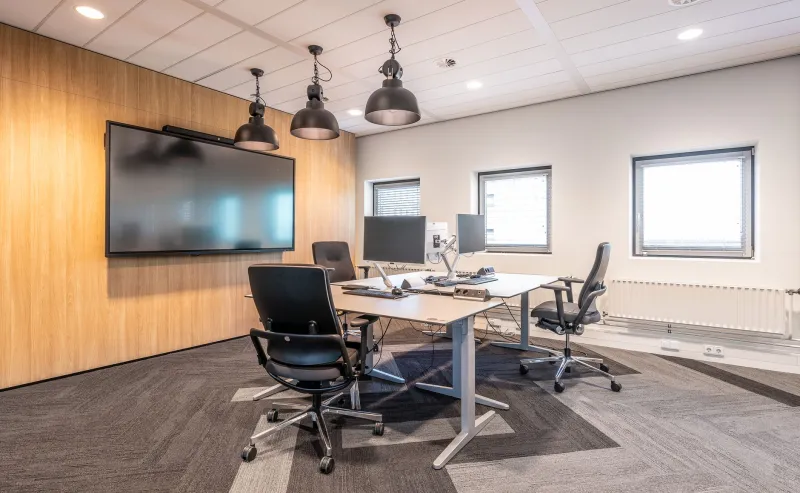
There is a room in nearly every Florida office building that tells the same story. It holds a rectangular table purchased a decade ago, a whiteboard with dried-out markers, a projector that requires three people and a laptop restart to operate, and lighting that flattens everyone seated beneath it into varying shades of exhaustion. It is the meeting room—and for most businesses, it has never once been treated as a strategic asset.
This is a costly oversight. Not in the abstract sense that consultants invoke when making broad claims about workplace culture, but in a measurable, operational sense. When the physical environment where decisions are made is poorly engineered, the decisions themselves suffer. When the room drains energy rather than focusing it, meetings run longer and produce less. When technology fails at the wrong moment, momentum is lost and trust in internal systems quietly erodes. For Florida companies operating in one of the nation's most competitive regional economies, that cumulative loss is not a minor inconvenience—it is a structural liability.
What the Research Reveals About Environment and Cognition
Decades of environmental psychology research have established a clear relationship between physical surroundings and cognitive performance. Temperature, lighting quality, acoustic conditions, and spatial configuration all influence how effectively people process information, retain focus, and reach consensus. These are not soft variables. They are measurable inputs with measurable outputs.
Meeting rooms that operate at elevated noise levels—whether from poor acoustic insulation, HVAC systems, or open-plan adjacency—force participants to expend additional cognitive energy simply filtering out distraction. That energy is finite. When it is consumed by environmental interference, less of it is available for the analytical work that meetings are supposed to accomplish. Studies have documented reductions in comprehension and recall under conditions of high ambient noise, which means that the decisions made in those rooms are, by definition, made with less information than participants believe they are using.
Lighting compounds the issue. Florida's abundance of natural light is an asset that most commercial interiors manage to squander entirely. Conference rooms positioned in building interiors, or those with windows obscured by outdated blinds, deprive occupants of the circadian and alertness benefits that natural light provides. Artificial lighting that skews toward cool fluorescent tones may technically illuminate a space while simultaneously generating visual fatigue over the course of a long session.
The Hidden Cost Structure of Inefficient Meetings
Calculating the financial impact of poor meeting room design requires only basic arithmetic, yet most business owners never perform it. Consider a Florida professional services firm with forty employees averaging a combined salary of eighty thousand dollars annually. If each employee participates in eight hours of meetings per week—a figure consistent with research on knowledge-worker time allocation—the company is investing roughly sixty thousand dollars per week in meeting time alone. If twenty percent of that time is wasted due to technical failures, acoustic distractions, or spatial configurations that impede collaboration, the annual cost of that inefficiency exceeds six hundred thousand dollars.
That figure does not account for the downstream consequences: the decisions that required a follow-up meeting because the first one failed to reach resolution, the proposals that were approved under conditions of collective fatigue rather than genuine consensus, or the talent that quietly began looking elsewhere after concluding that the company's internal culture reflected the same disorganization as its conference rooms.
Layout as a Strategic Variable
The shape of a meeting room table is not a trivial matter. Rectangular configurations with a defined head position create implicit hierarchies that shape participation patterns before a single word is spoken. Research consistently shows that individuals seated at the periphery of long rectangular tables contribute less to discussions and retain less from them. Circular or modular arrangements, by contrast, distribute authority more evenly and tend to generate broader participation across a group.
For Florida companies invested in building collaborative cultures—particularly those competing for talent in markets like Miami, Tampa, and Orlando where employee expectations have risen substantially—the spatial grammar of meeting rooms sends a signal about organizational values that no amount of mission statement language can override.
Beyond table configuration, the ratio of meeting room size to typical occupancy matters considerably. Rooms designed for twelve that routinely host groups of four create a psychological diffusion of energy that undermines focus. Conversely, cramming eight people into a space intended for five generates a physical discomfort that shortens attention spans and accelerates decision fatigue. Right-sizing meeting spaces to actual usage patterns is among the highest-return adjustments a facilities team can make.
Technology Integration: The Difference Between Friction and Flow
In an era when hybrid work arrangements have become standard across Florida's professional landscape, meeting room technology has graduated from a convenience to a competitive necessity. A room that cannot reliably connect remote participants to in-person conversations does not merely create logistical inconvenience—it communicates to distributed team members that their presence is secondary, and it consistently degrades the quality of decisions made across that divide.
The standard for effective meeting room technology is not extravagance. It is reliability, simplicity, and integration. Camera placement that captures the full room rather than a narrow slice. Audio systems that eliminate echo and ensure remote participants can hear clearly. Display configurations that allow shared content without requiring participants to physically reposition themselves. Wireless connectivity that does not require a cable hunt before every session.
When these elements function seamlessly, they disappear from participants' awareness entirely—which is precisely the point. The goal of well-integrated meeting room technology is to remove the environment from the equation and return full cognitive bandwidth to the work at hand.
Florida-Specific Considerations in Meeting Space Design
Florida's commercial real estate market presents a distinct set of design challenges that firms operating in other regions may not encounter. The state's subtropical climate means that acoustic insulation must account for HVAC systems working significantly harder than in cooler markets. Exterior-facing meeting rooms in glass-curtain commercial buildings—common in downtown Miami, St. Petersburg, and Jacksonville—must balance natural light access with solar heat gain control, a balance that requires intentional glazing and shading solutions rather than generic window treatments.
The state's demographic diversity also introduces considerations around meeting room accessibility and cultural ergonomics that deserve strategic attention. Florida businesses serving multilingual client bases or operating teams across multiple cultural contexts benefit from meeting environments designed to minimize environmental stressors that disproportionately affect participants who are already navigating communication in a second language.
Redesigning for Return
The companies that have made intentional investments in meeting room design consistently report outcomes that extend beyond the rooms themselves. Meetings that resolve more quickly generate organizational momentum. Spaces that support genuine collaboration produce decisions with broader internal buy-in. Technology that functions reliably reduces the low-grade anxiety that accumulates when employees have been conditioned to expect failure.
For Florida business leaders evaluating where strategic investment will generate the most durable return, the meeting room deserves a position near the top of that list. Not because it is the most glamorous renovation a company can undertake, but because it is among the most frequently used assets in the entire operation—and among the most consistently underbuilt.
A well-designed meeting room does not announce itself. It simply allows the work inside it to proceed without resistance. In an environment where every hour of productive time carries real financial weight, that absence of friction is worth considerably more than most organizations have yet calculated.