Quiet Quitting Starts With the Building: How Florida Workplaces Drive Disengagement Before the Resignation Letter Arrives
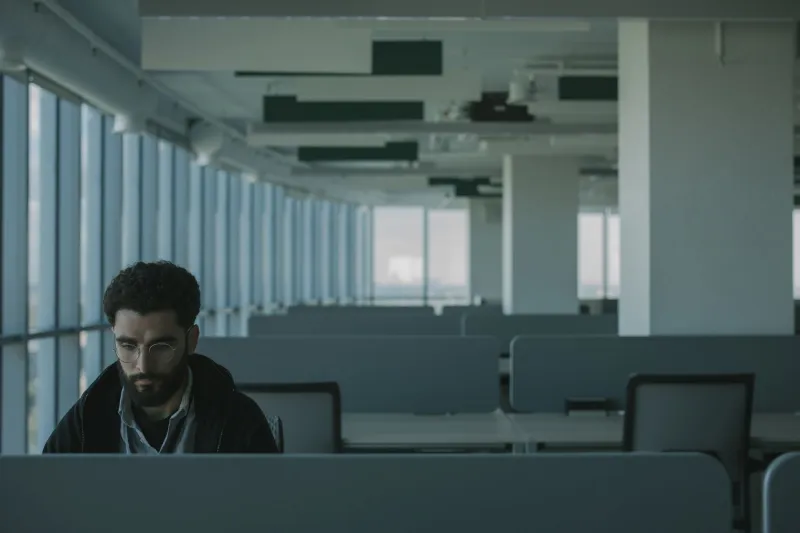
There is a moment—often unnoticed—when a high-performing employee begins to disengage. They still attend meetings. They still complete assigned work. They still respond to messages within a reasonable window. But something has shifted, and that shift, left unaddressed, almost always ends the same way: with a resignation that appears to come from nowhere.
For Florida business leaders navigating one of the most competitive labor markets in the southeastern United States, this invisible transition from engagement to departure represents one of the most expensive and preventable losses a company can absorb. The challenge is that its origins are rarely where leadership looks first.
The Misdiagnosis Problem
When productivity softens or collaboration thins, the default explanation in most organizations is external: a difficult quarter, seasonal market fluctuations, or the residual effects of industry-wide disruption. Florida's business environment—with its pronounced seasonal rhythms, hurricane-season disruptions, and tourism-driven economic swings—provides ample cover for these misattributions.
But in many cases, the root cause is far closer to home. It is embedded in the physical spaces where employees spend eight to ten hours each day. It lives in the workflow systems that either support clarity or generate friction. It exists in the absence of operational transparency that leaves talented professionals feeling peripheral to the decisions that govern their daily work.
When a company consistently misdiagnoses disengagement as a market problem, it applies external solutions to an internal wound. The result is a cycle of turnover that accelerates over time, draining institutional knowledge and compounding recruitment costs with each departure.
What Disengagement Actually Looks Like
The early indicators of what might be called an invisible departure are subtle but measurable. Project timelines begin to stretch without clear explanation. Employees who once contributed ideas in group settings begin defaulting to silence. Informal collaboration—the kind that happens in hallways, at shared workstations, or during brief exchanges near common areas—declines noticeably.
These are not personality changes. They are environmental responses. When a workspace fails to support the kind of interaction that sustains engagement, employees adapt by withdrawing. When operational systems generate ambiguity rather than clarity, talented people stop investing discretionary effort into outcomes they cannot predict or influence.
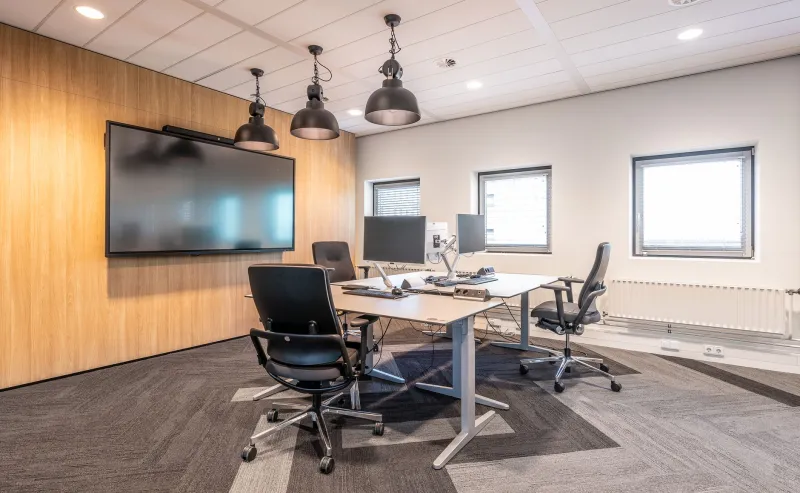
In Florida's office markets—particularly in high-growth corridors like Tampa Bay, Orlando, and South Florida—businesses frequently inherit commercial spaces that were designed for a prior era of work. Open floor plans built for volume rather than function, conference rooms that prioritize square footage over acoustic integrity, and common areas that serve no clear collaborative purpose all contribute to an environment that quietly erodes the conditions under which people do their best work.
The Design Factors Most Leaders Overlook
Strategic workspace design is not primarily an aesthetic exercise. It is a functional one. The physical arrangement of a workplace communicates organizational values, shapes daily behavior, and either enables or impedes the kind of work that drives business outcomes.
Consider the relationship between workspace design and psychological safety. Employees who lack access to private or semi-private spaces for focused work or sensitive conversations are less likely to raise concerns, propose unconventional ideas, or engage in the kind of candid dialogue that strengthens teams. When every conversation is visible and audible, people self-censor—and self-censorship is one of the earliest forms of disengagement.
Similarly, the physical distance between departments or teams in a commercial space has a measurable effect on cross-functional collaboration. When the layout of a floor plan places key stakeholders in proximity, informal coordination increases naturally. When that same layout isolates teams by function without providing intentional convergence zones, silos form—and silos accelerate the sense of disconnection that precedes departure.
Lighting, temperature control, noise levels, and access to natural views are not amenities. They are variables in a productivity equation that most Florida businesses have never formally examined. The research on environmental psychology is unambiguous: workers in poorly calibrated physical environments report lower satisfaction, reduced concentration, and diminished organizational loyalty—regardless of compensation levels.
Operational Transparency as a Retention Mechanism
Beyond the physical environment, the operational systems that govern daily work play an equally significant role in preventing invisible departures. Transparency—the degree to which employees understand organizational priorities, decision-making rationale, and their own contribution to broader outcomes—functions as a retention mechanism that no compensation package can fully replicate.
Florida companies that invest in clearly documented workflows, accessible performance metrics, and consistent communication channels give their people a sense of agency that sustains engagement over time. Those that operate through informal hierarchies, undocumented processes, and opaque decision-making create the conditions in which talented professionals begin to question whether their presence meaningfully matters.
This is not a cultural abstraction. It is a design problem. Operational transparency can be architected through deliberate system design—structured feedback loops, shared project dashboards, clearly defined escalation paths, and regular forums in which employees at every level can surface observations without risk. These systems do not emerge organically in most organizations. They must be built intentionally.
Reversing the Drift Before It Becomes a Departure
The encouraging reality is that invisible departures are, by definition, still reversible. The employee who has begun to withdraw has not yet left. The engagement that has diminished has not yet extinguished. With the right diagnostic approach, Florida businesses can identify the environmental and operational factors driving disengagement and implement targeted interventions before the resignation letter materializes.
This process begins with honest assessment—not of individual employees, but of the systems and spaces in which those employees operate. A structured workspace audit examines how physical design is either supporting or undermining the behaviors that drive retention. An operational review identifies the friction points, ambiguities, and communication gaps that erode trust and agency over time.
From that foundation, strategic redesign becomes possible. In some cases, this means reconfiguring existing floor plans to introduce the variety of work settings that today's employees require. In others, it means formalizing the operational infrastructure that gives people clarity about their role in the organization's future. In virtually every case, it means treating retention not as a human resources challenge but as a design challenge—one that demands the same rigor and intentionality applied to any other dimension of business strategy.
The Cost of Waiting
Florida's labor market remains intensely competitive. Skilled professionals in fields ranging from technology and finance to healthcare and professional services have options, and they exercise them with increasing frequency when their current environment fails to meet their expectations.
The companies that will retain their most capable people through the next cycle of disruption are not necessarily those offering the highest salaries or the most generous benefits packages. They are the ones that have taken the time to examine—honestly and systematically—the environments they have built and the systems through which they operate.
Invisible departures are not inevitable. They are the predictable consequence of environments that were never designed with the human experience of work in mind. Addressing them requires seeing what most organizations choose not to look at—and having the strategic discipline to act before the cost becomes irreversible.